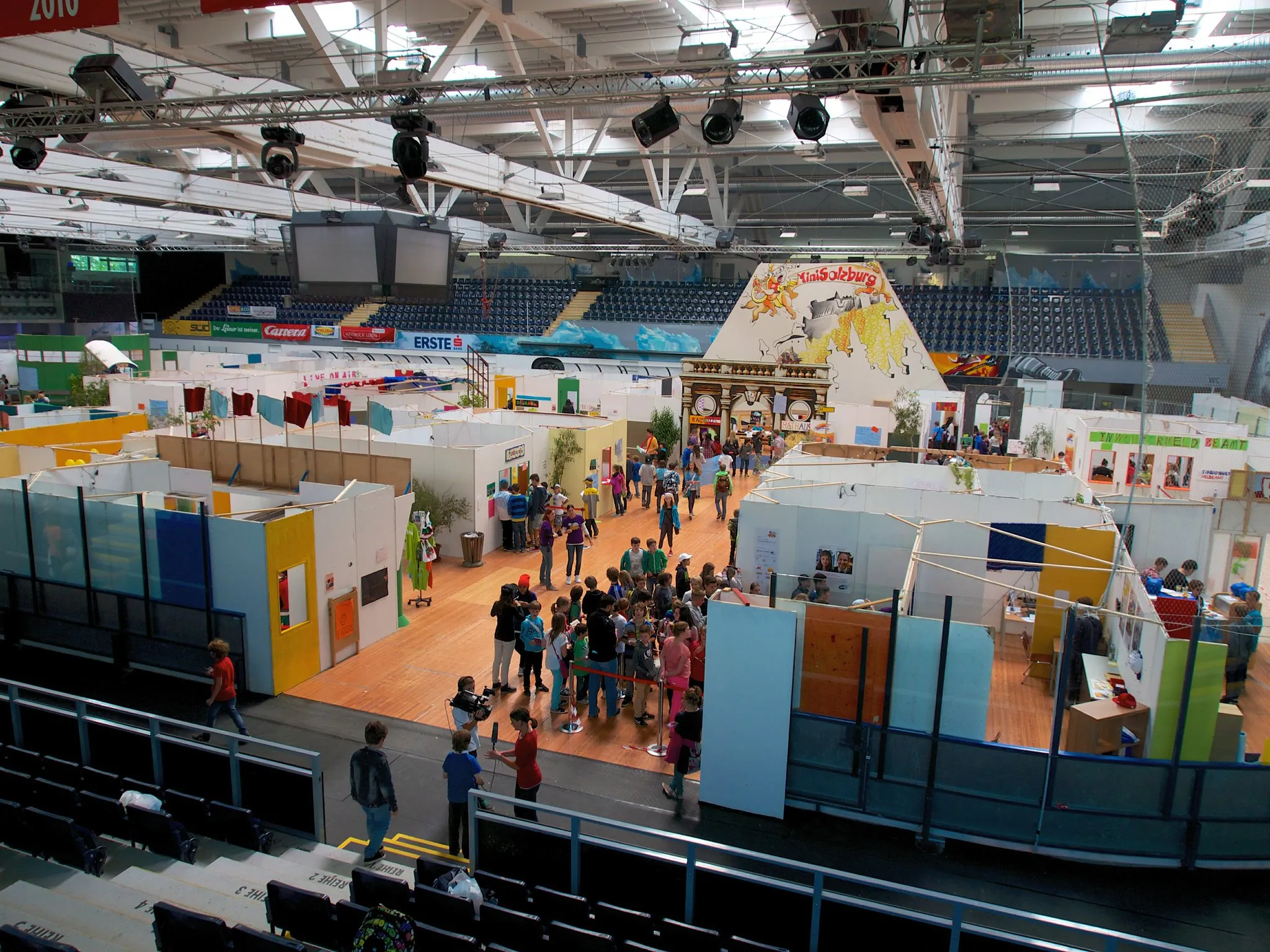
The tents in Salzburg’s Volksgarten have already been taken down, the computers and scanners packed away. A week after its conclusion, there’s not much left to see of the children's city Mini-Salzburg. So it’s time to draw a conclusion!
For three weeks, we – the team from Augmented Reality Communities and the Artificial Museum – were part of the children’s city with our Mars Mission and Science Fiction Lab. On a total of 14 play days, an impressive 124 utopias – that is, cities on Mars – were created. But let’s start at the beginning with our review:
The first days
On the first of July, we began setting up. The workflow had been tested, all devices were charged and ready. In total, we started out with three laptops, a flatbed scanner, a photo booth with webcam, three smartphones, two tablets, five pairs of headphones, a label printer, and a laminator. For the design of our station, we also had silver-reflective tablecloths, two roll-ups, a banner, a Mars globe, and many posters. The Mars Mission was ready to launch!
On Tuesday, July 2, the play operations began.
“Do you still have spots left?”
“Yes, we do!”
“What can I do here?”
“Here, you can build your own city on Mars.”
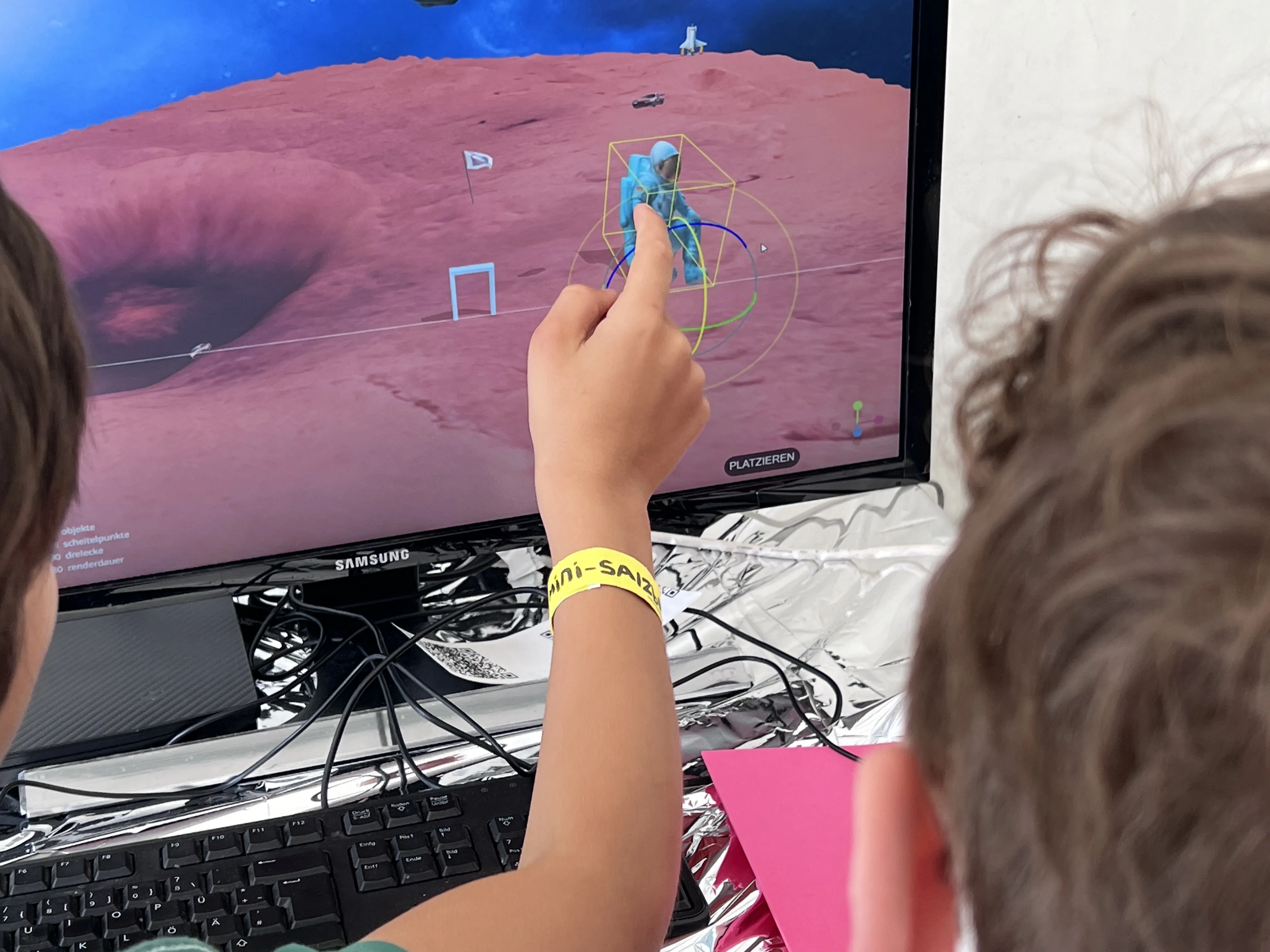
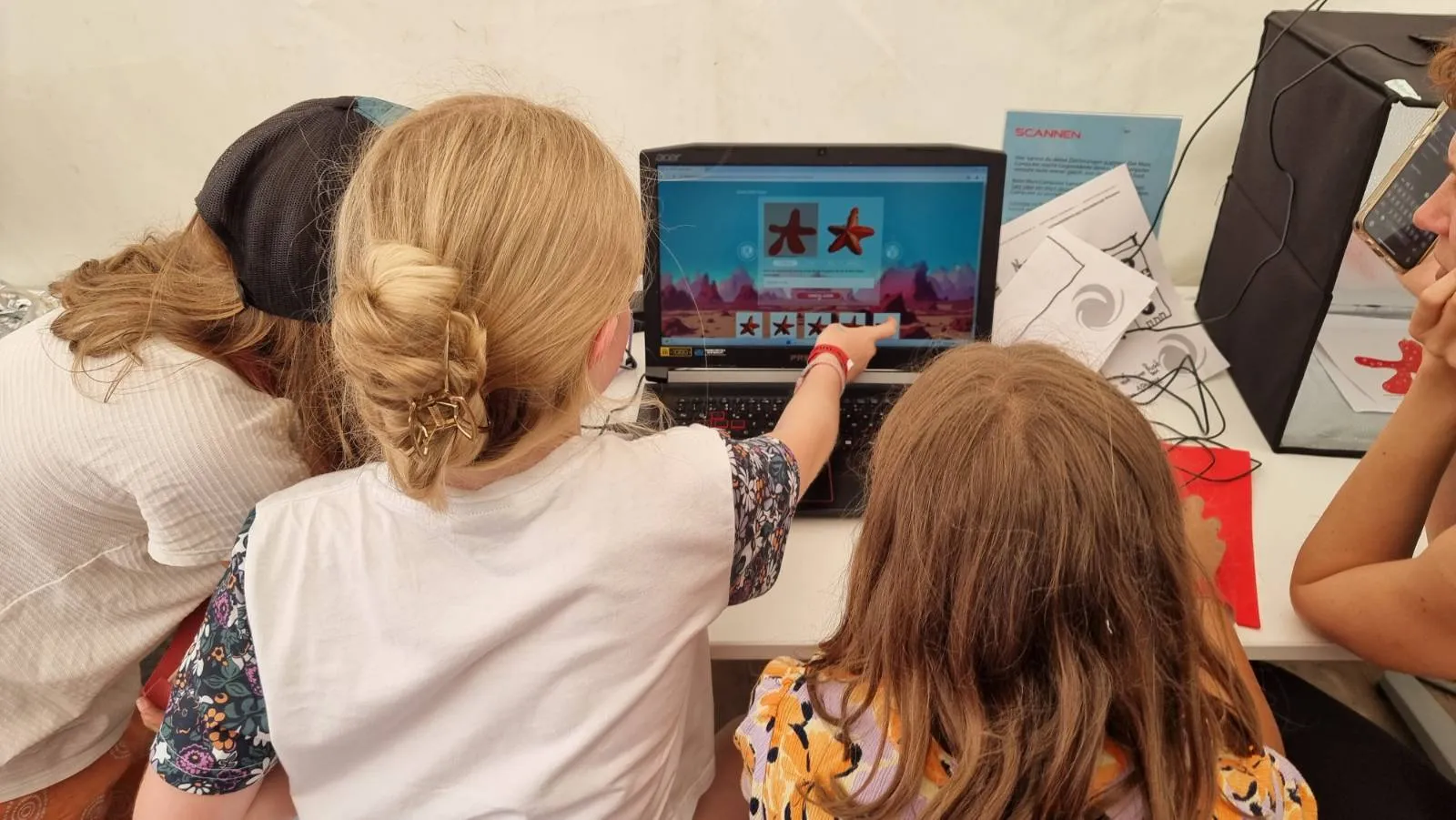
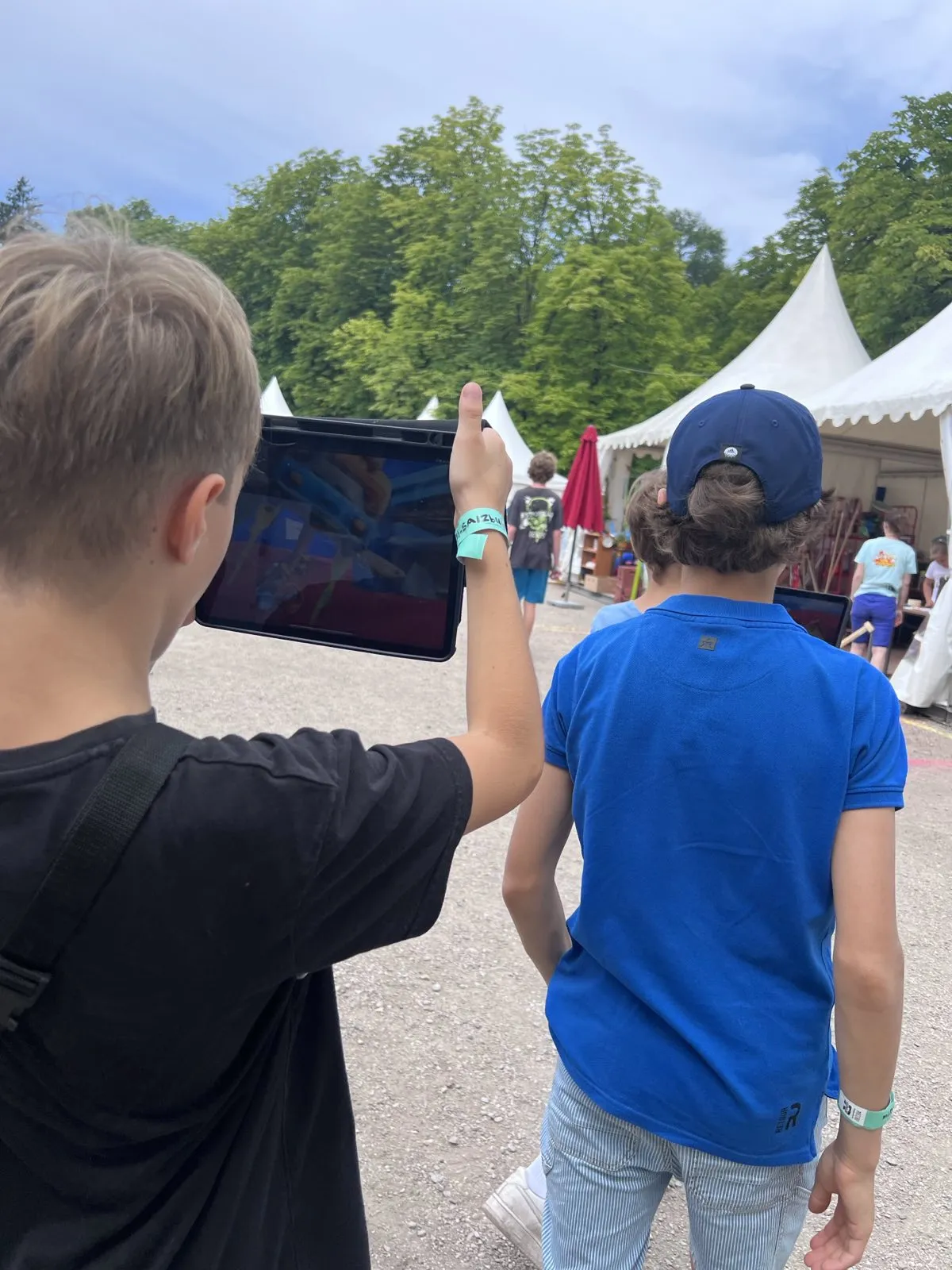
First, an astronaut ID had to be filled out. Then, groups were formed and the children chose a name for their city and designed a flag. Next came object designing: hand-drawn objects were scanned in the photo booth and turned into 3D objects with the help of two artificial intelligences. These objects could then be placed, scaled, and rotated by the children on a virtual Mars surface using a customized editor. As a grand finale, the utopia could be viewed and evaluated in Augmented Reality. Once any final issues were resolved, the children received a QR code that allowed them to open the portal to Mars and their utopia from anywhere (with an AR-enabled device and internet connection).
Flow despite the heat
In the first week of play, we were able to fix some small bugs and errors in the workflow. From the second week on, operations ran (almost) without interruptions. At times, the children managed the entire station themselves – we could only watch in awe. From filling out the Mini-Salzburg passports and research certificates to explaining the workflows and even communicating with the Mini-Salzburg media – the children took full responsibility for their Mars Mission.
The days were long and the sun often beat down relentlessly on the roof of our tent. A few clouds and a bit of rain were a welcome change. But regardless of the weather: the children were motivated and enthusiastic, and the play operations in the children's city and at our station rarely came to a halt. The three weeks flew by and at the same time felt like they lasted half a year. Anyone who has ever taken part in the children’s city will probably recognize this warped sense of time.
What remains?
We’re currently processing the children’s city experience for our research project. Was the technology a hindrance or a help for dreaming and imagining utopias? What effect did turning their own drawings into digital 3D objects have on the children’s creativity? To what extent is it empowering to use digital tools to shape one’s own environment? Possible answers to these and many other questions are swirling in our heads right now and waiting to be sorted. We expect to have preliminary results by fall. What we can already provide is an overview of the statistics:
Hard Facts
- 124 utopias (cities on Mars)
- 1103 3D models
- 9290 Stable Diffusion 2.5D images
Saving the best for last
At our station, we had a logbook where children could leave feedback for us. Here are some entries we don’t want to withhold. We translated the entries to English:
- “I think it’s cool that you can just let your imagination run wild here. This station is the best – on purpose.”
- “It was a lot of fun and you learn a lot. It’s fun for young and old.”
- “I really enjoy working here and give you my feedback from the bottom of my heart.”
- “One thing to note is that the heads of the 3D models are dented or holey or almost not there at all.”
The creativity of the children in naming their Mars cities is shown in these examples (among many others!):
- Lamborghini Dog Home
- Marsa Melonia Zitronia
- The Alien Baster
- GluRaup
- Cheese Gang
- Lumilia
- and many more
Under this link all Mars cities can be explored and admired with an AR-enabled device.